
Doctor shows smiling older patient how to use Continuous Glucose Monitor

Diabetes Stigma

Providing supportive and compassionate care to people with type 2 diabetes.

Diabetes stigma can manifest as blame, shame, judgement, or negative stereotypes toward people because they have type 1 or type 2 diabetes. This problem extends to the healthcare setting, and some physicians who treat patients with type 2 diabetes stereotype these patients as lazy, lacking motivation, and non-compliant with treatment. In this module, we explore the role healthcare professionals play in addressing the health harms of stigma in their patients with type 2 diabetes and strategies to provide them with supportive and compassionate care.

Video by Rebecca Puhl about diabetes stigma in healthcare

Addressing stigma to improve patient care for people with type 2 diabetes

A summary of strategies that healthcare professionals can implement to reduce these forms of stigma in clinical practice and improve supportive healthcare delivery to patients with type two diabetes.

Video by Dr. Rebecca Puhl discussing the intersection of diabetes stigma and weight stigma.

Intersecting harms of diabetes stigma and weight stigma

 People with diabetes can experience stigma both because of their diabetes and because of their body weight. This video examines both diabetes stigma and weight stigma, and their harmful impact on individuals with diabetes.

Diabetes stigma and its harm for people with type 2 diabetes

Several key factors are necessary to reduce stigma in clinical practice and improve care for patients with type 2 diabetes. These include addressing healthcare professionals’ assumptions about diabetes and obesity, promoting respectful communication, and creating a welcoming and appropriate clinic environment for patients.

Download Handout

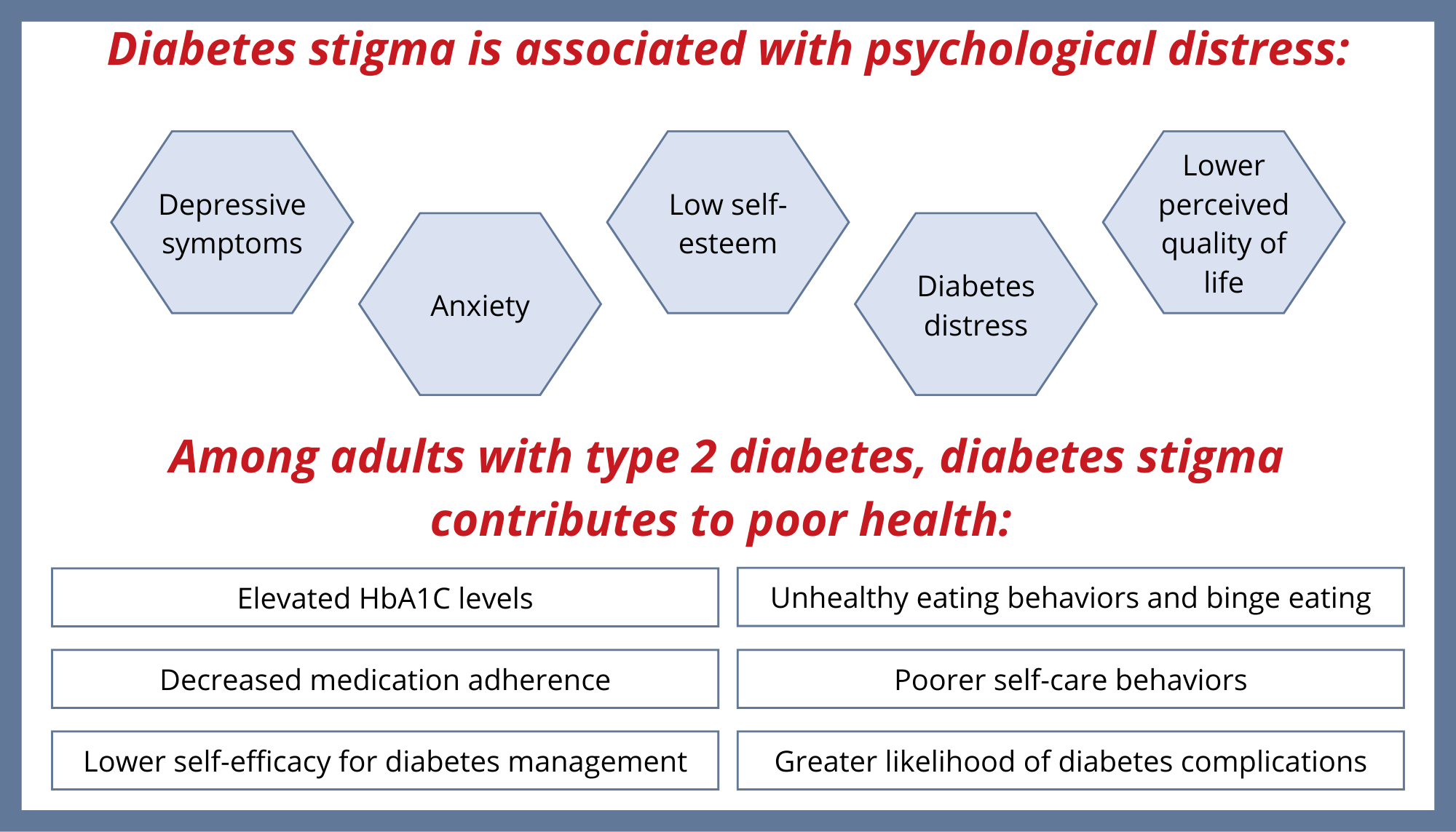
Diabetes stigma is associated with psychological distress, including depressive symptoms, anxiety, low self-esteem, diabetes distress, and lower perceived quality of life. Among adults with type 2 diabetes, diabetes stigma contributes to poor health outcomes including elevated HbA1C levels, unhealthy eating behaviors, decreased medication adherence, poorer self-care behaviors, lower self-efficacy for diabetes management, and a greater likelihood of diabetes complications.

Content Referenced in this Module

Video by Rebecca Puhl about improving healthcare for people of all body sizes

How can we improve healthcare for people of all body sizes?

Professor Puhl highlights how we can adapt our attitudes, language, and environment to provide satisfactory care.
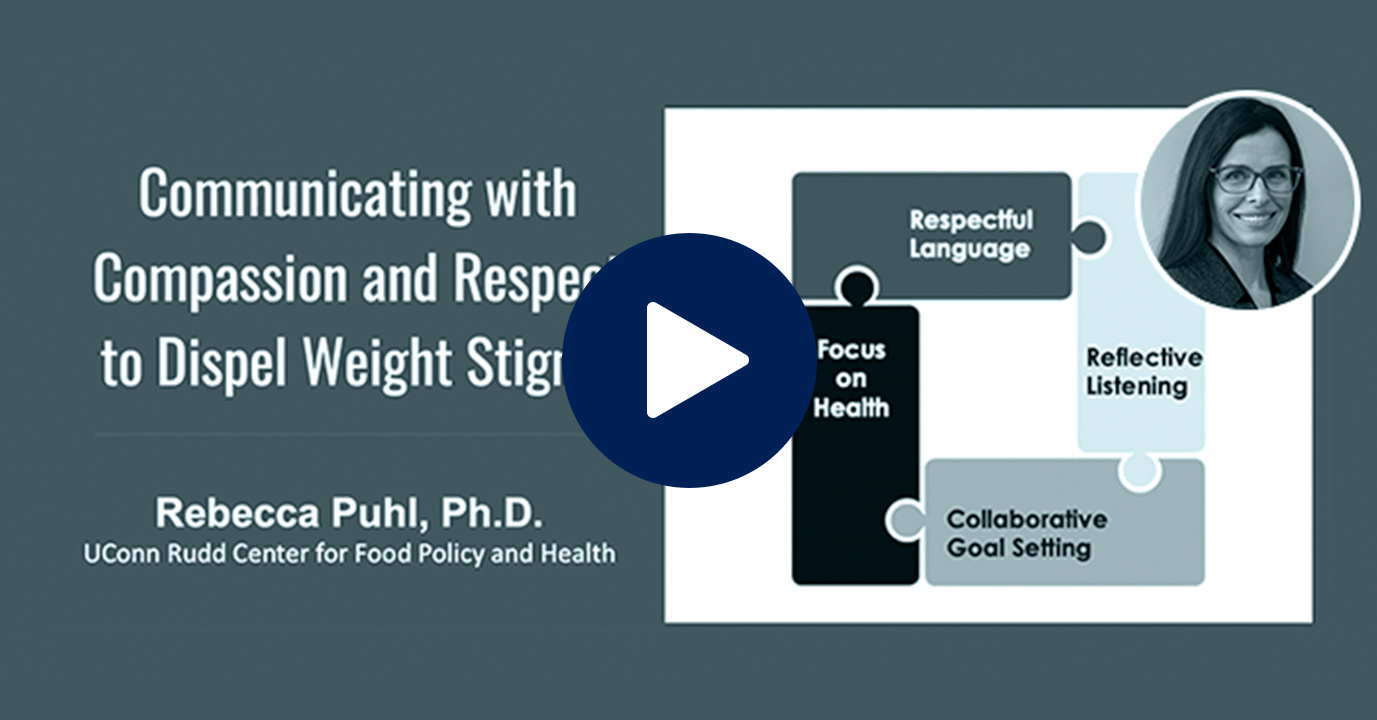
Video by Dr. Rebecca Puhl illustrating communication techniques to avoid weight stigma.

Communicating with compassion and respect to dispel stigma

Learn what forms of communication to use (and avoid) for optimizing supportive conversations with patients.

Video with Patty Nece sharing insights into weight discrimination

A patient’s perspective of weight bias: Insights from Patty Nece

Patty describes what it is like to be a patient experiencing weight stigma in the healthcare setting.

Video with Dr. Jaime Almandoz sharing how weight bias hinders healthcare

How weight bias hinders healthcare: Observations from Dr. Jaime Almandoz, M.D.

A discussion with Dr. Jaime Almandoz, M.D., Associate Professor, Department of Internal Medicine, & Division of Endocrinology, UT Southwestern Medical Center.

Guided self-reflection on the impact of weight stigma

Guided self-reflection on weight stigma in healthcare

Become more aware of your views about body size, interactions with patients, and strategies for ongoing, reflective practice.
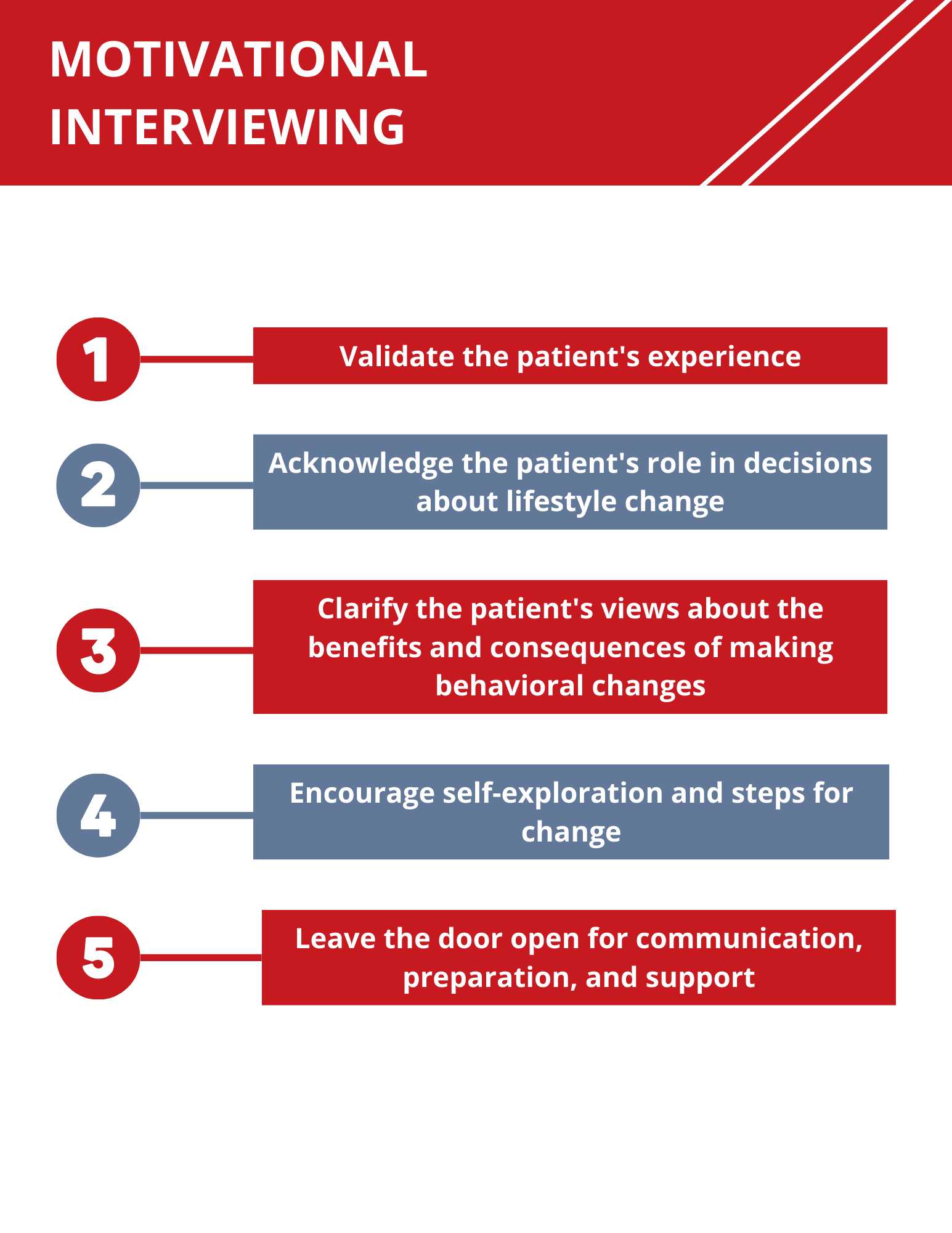
Handout showing motivational interviewing is a useful tool when discussing weight management.

Motivational interviewing

How to use motivational interviewing, an evidence-based approach for guiding behavior change, with example scripts for patient interactions.
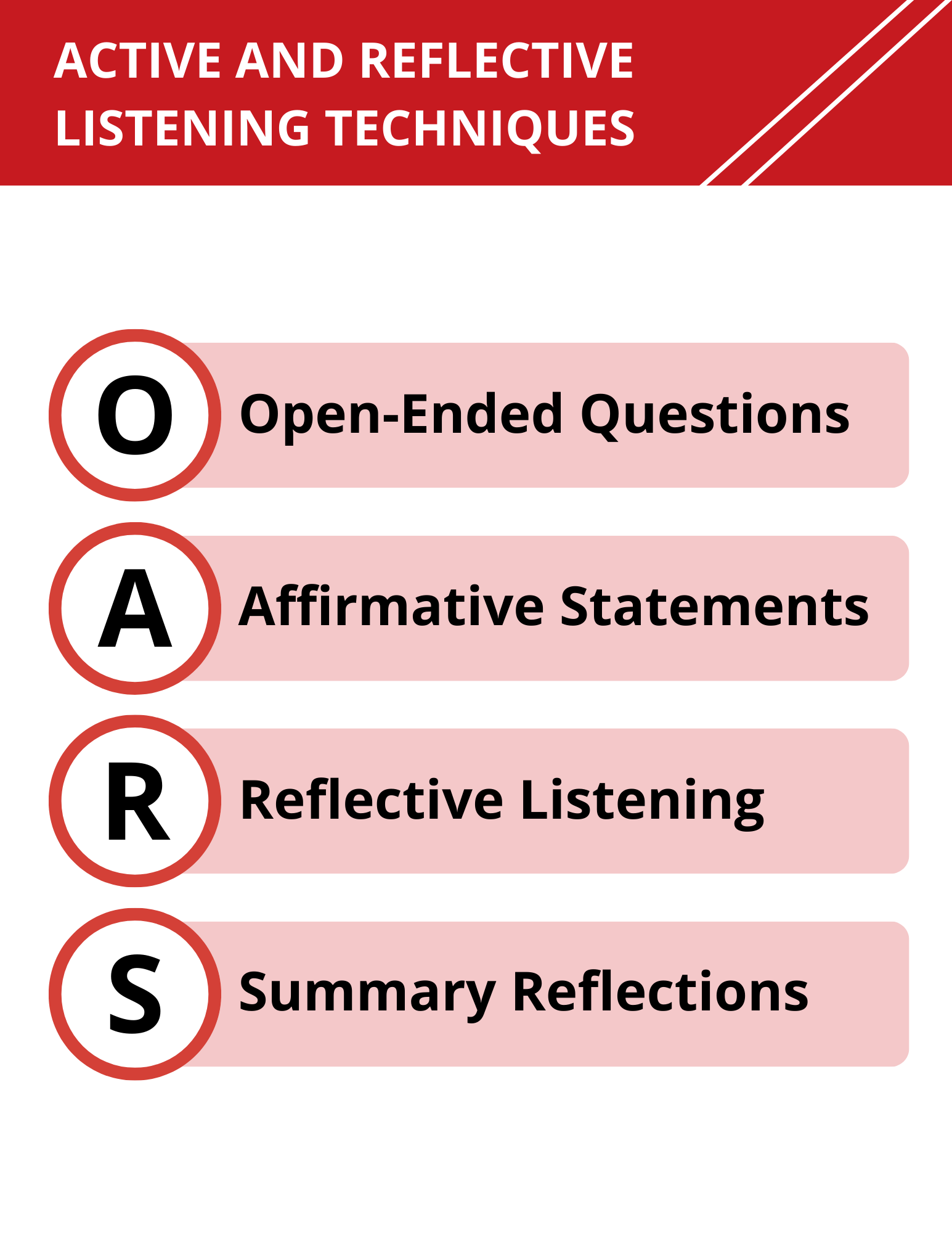
Tools to use for reflective listening.

Reflective listening

How to use reflective listening strategies to improve the quality of your communication with patients of diverse body sizes.

Tools to use for patient-centered communication.

Patient-centered language

A summary of how to use patient-centered language when talking about body weight.


Copyright © 2026 UConn Rudd Center. All rights reserved.
VV-MMAT-00263 © 2026 Lilly USA, LLC. All rights reserved.